
Culture
Epic of King Kesar

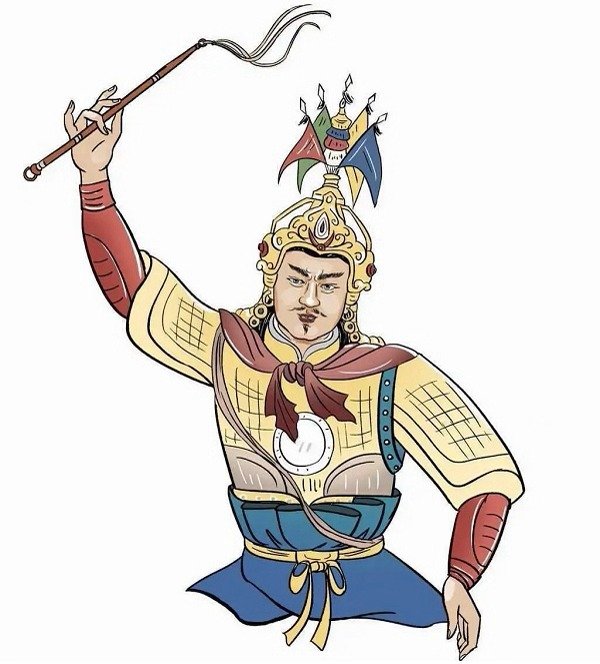
Like other regions of Tibet & Magnolia, the Epic of Kesar-the son of god has been equally popular in Baltistan-the Little Tibet, and Gilgit and Hunza (Brushal) since its creation. For centuries and millenniums, this grand epic was not written but transmitted orally from one to the other generation like a holy gospel.

The Epic of King Kesar possessed a great importance in the societies of Baltistan from the very beginning to late 19th century AD, the time when a great change started emerging in the region by introduction of Islamic and modern Persian and Urdu Literature. In the past, this epic was the prime Literature of all Tibetan regions including Baltistan and in Brushal i.e. presents Gilgit & Diamar Divisions. as and had a very important role in forming the local culture, traditions, games and sports, politics and the social structure and it remained the greatest source of entertainment as well.
I had the opportunity to record the epic in 1980 when I accompanied with Dr.Renate Sohnen (Tubingen University Germany) who visited Baltistan collect and record some legends and folk songs of Baltistan. We recorded the Kesar epic from late Abdur Rehman Mistripa in Stak village of Baltistan who was the last master epic reciter. Dr Sohnen made two copies of the epic. We both had one copy each for our literary use.
I had been going through this epic for several years and I had the opportunity to read some books on the mythology of ancient Greece, Egypt, India and history of Persia as well and some other books. Study of these books increased my interest and knowledge in epics and legends and acquainted me with the high value of this epic as well.
In the 1st International Symposium on King Kesar (Chinese Gesar) Epic in Chengdu China-1988, I presented my paper “A Survey of the Legendary Kesar in Baltistan Area” as well as sang a song from the epic showing the Kesar singing tradition in Baltistan, both were approbated by many scholars from outside as well as inside the China .
It is strange to note that the Epic of King Kesar (Baltistan version) contains many subjects, events and characters similar to Greek and Egyptian Mythology as well as ancient Persian history. In this regard, this epic covers many characters, events of Golden and Silver Ages of Greek Mythology, the early time of the Pharos of Egypt and the beginning of the Persian Empire by Cyrus the Great. For example Egyptian gods and deities Khnum, Horus and Anubis are very similar to Phasangkha Raskes (father of Kesar), Khre-bu Khraqthung, Wamoe-bu Joli (uncles of Kesar) etc.; AND the Symplegades (clashing mountain) and Braq-sgo Jiring-mo in Nar village of Skardu, and Golden fleece of ‘Jasson and the Argonauts’ and quest for the golden fleece of Brong Xampa in Kesar Epic look very same. Moreover, Valhalla of Northern (Scandinavian) Mythology and Yashirat Katsa look very similar. We find two abodes of Kesar in the epic. First Yashirat Katsa a spacious cave or rock-cut house, during his youth and later his castle Shel-kar Ldem-khar during his lordship. Shel-kar Ldem-khar means a hanging castle of white crystals, which clearly gives the idea of a dwelling place in the high crystal mountains. It is also analogous to the rock-dwellings of the Samoud people, whose time period has been reckoned as 2200/2000 BC. Moreover, a tale in this epic i.e. the abduction of the goddess Lha-mo Brung-mo, the wife of Kesar by the Turkish king Plaghal-lde and her recovery by Kesar look very similar to the abduction of Sita the pious wife of Ram Chanderji of Indian Saga “Ramayan” by Rawan of (Sri) Lanka and recovery of her by Ram Chanderji. But here, Kesar stands much higher than Ram Chanderji, as he reached the Turkish capital, plundered Turkish army and brought back his wife single handedly overcoming all magic-powers, human and monstrous obstructions and other hazards. It is generally believed that the story of Ramayana came in to being during pre-historic time of India. Keeping in consideration the above similarities of characters, events and social lives, it can be convincingly said that the epic of Kesar was composed or created in between 2000 BC; and 1500 years BC.

Similarities of matters, events and characters in this epic with the mythology of Greece and Egypt give us a clear indication that during the prehistoric time or precisely in the 1st and 2nd millennium BC; there was a strong relationship between the east and the west, and they used to influence each other through trade and tourism through the Silk-routes. It is very interesting to read that an outstanding research scholar of Kashmir Professor Fida Muhammad Husain and Suzanne Olson from New York who are particularly involved in researching the ancient history of the sub-continent and its northern bordering places like, Ladakh and Kashmir, in their books. Prof. F. Hansen in “The Fifth Gospel” writes (page -8) “Contacts between East & West: From time immemorial there have existed contacts between the East and the West. Besides the sea routes, there were land routes for commercial as well as political purposes. It is a historical fact that there have been continuous migrations from West to East, during ancient and medieval period of our history, in search of better natural resources of food, water and wood. We have scanty references about actual routs used by the nomad tribes during their migration. However, it is clear that there existed links between the Middle East countries with India, Afghanistan, Central Asia and Tibet. (Page-9) It may be pointed out that since ancient times, there existed an easy highway from Arabia to Persia, then to Afghanistan and North India to Kashmir to Tibet and the Pamir’s”. (Page-199) “The Silk Route: During the ancient world, the countries in the south west Asia, formed one compact unit. During the 6th century BC; Iran, Afghanistan, Pakistan and some regions of the northern India formed part of the Achaemenian dominion of Cyrus and Darius. The people living in this vast tract of land, had close links by way of trade, commerce and culture.”.Prof.Hasnain further writes “from ancient times, the valley of Kashmir had established commercial relations with Afghanistan, Iran, Central Asian countries. Its capital lay on the Silk Route, which connected East and West. Many centuries before the advent of Jesus Christ, the armies of the Greeks, penetrated in to North India and the Indus basin through land routes of the past”. (200) “Herodotus knew the people of Kaspira or Kashmir”. “During the reign of Cyrus, the Great, the whole region from Thebes to Taxila in the Punjab came under the domination of the Persians. With the extension of the Persian empire by Darius, right up to the North-western regions of India, the valley of Kashmir including Hunza, Nagar and Chiral came under direct control of the Persians”. “It may be pointed out that the Mediterranean people started moving and spreading towards East, North and the West, in the beginning of Neolithic age. One branch migrated towards North-west of Indian sub-continent. More-over Professor Hansen in his another marvelous research work (book) “Roza-Bal” has given the detail that how the Christ was narrowly survived from the crucifixion and after healing from his wounds flee from Jerusalem to the east out of Roman Empire domination with his holy mother and followers and finally arrived in Kashmir, Srinagar where he married with a Kashmiri lady “Marjan” spent some years, and finally took his last breath and was buried in a place which is well known by “Roza Bal” –the tomb of an unknown (or forgotten prophet).These quotations from The Fifth Gospel and Roza Bal manifest the human relationship between the West and the East, including the area in the North-west of Indian sub-continent which include Kashmir, Ladakh, Baltistan and the valleys of Hunza, Nagar and Chitral in the antiquity. It is also historical fact that the first Persian Emperor Cyrus –the Great had conquered the area in the north of Persia and crossed Bolor range and conquered the areas on the right bank of River Indus and included in his empire, which certainly put some historical and cultural influence of the west over this lofty mountain valleys.Thus the migrants from the west i.e. Egypt, Greek controlled area of Palestine and the Arabs brought their myths and stories with them which were incorporated in the local fables and myths of the mountainous areas of Hindu Kush and Himalaya and a new epic was evolved under the name of Kesar.

During the study of this Epic, it was conceived that though Kesar had a very complex nature and habits , he used all type of sorcery, tricks and seduction to overcome his opponents but his fashion of activities and adventures cannot be measured on the scale of good or evil of our time. If we l look into the purpose of sending him to this world-the world of human being, his adventures against the oppressors, the devils and monsters, who were the symbols of evil, Kesar’s deliverance of safety to the common human beings and making the world a peaceful realm, give us a clear clue that he might be one of the savior and an apostle of God in his own time, as the Holy Quran says “And certainly, we raised in every nation an apostle. – (The Bee; verse No.36)” However, the readers and the scholars may give their best judgment regarding the personality, life and mission of Kesar.
The name Kesar (Chinese pronounce it Gesar) looks itself, a western oriented name. And as I believe, it is a transliteration of Caesar of Roman or Kisra of Persian history, like Qaiser is the Arabic version of these titles. In Tibetan Dictionaries (like Jaschke) Kesar has been explained in two different ways i.e. (a) It is actually the corrupt form of sKey-sar which means a ‘re-incarnated” or new-born (re-born) one and (b) Name of a wild flower grown in the Tibetan mountains. In an Urdu-English Dictionary, Kesar has been termed as Saffron and in a dialect as a Lion (Pl. see Kitabistan 20thCentury STANDARD Dictionary, Lahore). However, it is very difficult to find out the correct etymology or origin of this name ‘Kesar” at the moment.
The manifestation of this Epic-which is termed as the Kesar -Baltistan version and Hunza version also, is that, it is absolutely a non-religious epic. It has neither any tradition of Islam nor any thing of Buddhism. However, it has many traditions of Shamanism. All the other versions of this Epic found in other Tibetan areas, China, Magnolia and India have been mashed and blended with Lamaism to make it a Buddhist Epic, thus mutilating its originality and historical and social values.
I believe that it is a great epic and is like a treasure in the bottom of sea and has no value unless this treasure is brought to surface and presented before its admirers. I bring this epic before the world readers and started translating it in English so that more and more readers could read it. I finished it incurring several years. In August 2017, two gentlemen from North Korea Mr.Byun, JiTae of Haroojai Club with another member, who were in search of an English version of Kesar Epic visited me and after a brief discussion, we made an agreement and they paid me 2000 US$ for my “permission” to translate it in to Korean language and produce as book for the members of Haroojai Club Seoul, Korea. This deal manifest that how much this great epic “Kesar-the son of god” (Baltistan version) possess a dynamic value in to the literary societies of the world
In 2020, the University of Baltistan, Skardu acquired my permission and published it under the title of “Kesar-the son of god” under their program of “Preservation & Promotion of Balti Folk Literature”,
About Author


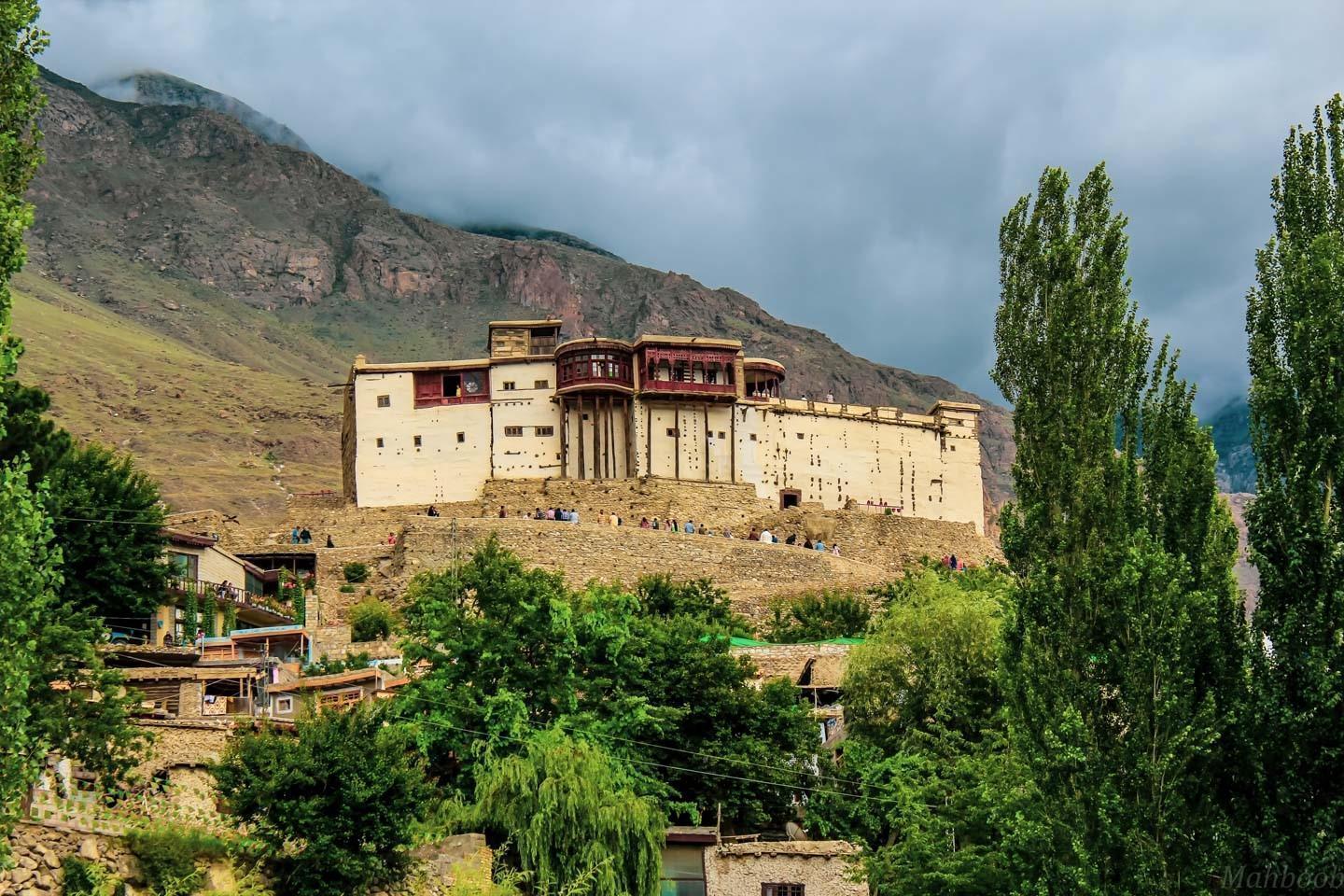
About Author



About Author


About Author


International Festival of Youth 2026 (IFY-2026): How to Apply, Tracks and Deadlines

Muhammad Azeem Khan: Pakistan’s Number One Amateur Featherweight MMA Fighter

A Drop for a Click: The Silent Cost of Our Digital Thirst


-

 Current Affairs2 years ago
Gilgit-Baltistan and the Geopolitics of the Third Pole
-

 Climate2 years ago
Eco-Friendly Alternatives: Gilgit-Baltistan’s Green Business Development Initiative
-
 Climate2 years ago
Glacier Marriage: Gilgit–Baltistan’s story of tying untraditional knots to mitigate the effects of Climate Change
-
 Tourism2 years ago
Panel Discussion on Community-Centric Tourism in Hunza on World Tourism Day
-
 Arts, Culture & Heritage2 years ago
Rumi, the Moral Psychologist
-
 Arts, Culture & Heritage2 years ago
Exploring Baltit Fort: A Jewel of Hunza Valley
-
 Arts, Culture & Heritage2 years ago
Altit Fort Hunza: A Must-Visit Destination in Pakistan
-
 Opinion2 years ago
A Tryst With History On The Karakoram