
Uncategorized
GilgitApp – The Future of Online Business


The new and emerging buying and selling app – reaches 3 million users in 40 cities across Pakistan.
GilgitApp is a revolutionary buying and selling app that has taken the local market by storm. The app has been developed by uConnect Technologies, a leading software company in Gilgit-Baltistan, founded by the Alumni of the Karakoram International University (KIU). The company has been successful in inspiring the emerging tech-landscape of the region, contributing immensely to shaping the emerging startup culture.
The app was launched in 2020 and quickly gained popularity, connecting buyers and sellers seamlessly and efficiently. The users on this platform can buy, sell, or exchange several products, including but not limited to, cars, bikes, mobile phones, laptops, home appliances, furniture, fashion products, garments, pets, houses, offices, and plots anywhere in Pakistan.
GilgitApp has been able to differentiate itself from other buying and selling apps by focusing on the local market and providing a platform tailored to the requirements of the local community. It led to several local businesses and individuals signing up for the app, creating a vibrant marketplace. In the span of just a few months, the app had thousands of active users and hundreds of listings.
Its success has not gone unnoticed – the app has been featured in local and national media, and its founders have been recognized for their innovation and entrepreneurship and invited to speak at various events and conferences.

GilgitApp was released originally to provide Covid-19 details in March 2020. Post-Covid, however, the team converted the app into an online buying-selling marketplace and it quickly gained the attention of a sizeable number of users. The founders of GilgitApp, along with their team, have taken steps to provide users with a better online buying and selling experience, including the Buyer Request feature that saves time and effort.
The app contains innovative features like Feature Ads that helps users by staying on the top of searches and the home page. In addition, users can pay for it and place products on top to get more visibility to the buyers which helps users to buy and sell different products online with a better experience.
The GilgitApp team is also working on other AI-backed features to help buyers and sellers with their transactions. The GilgitApp has created new opportunities for businesses and individuals and made it easier for people to buy and sell goods. It is a great example of how technology can be used to create a more connected and prosperous community and serves as an inspiration for other entrepreneurs and small business owners.
Ejaz Karim, the CEO, and Co-founder of GilgitApp says that“we have developed some exciting features to give our users a better online buying and selling experience. The app not only aims to help individual consumers but also develop business solutions for SMBs as well as SMEs. Through our startups, we are working hard to bring tech-oriented economic change not only in Gilgit-Baltistan but all across Pakistan.”
Ehsanullah Baig, the other co-founder, and product manager at GilgitApp, says, “At, GilgitApp, we do everything that gives our users a better online buying and selling experience. For example, the Buyer Request feature makes the life of thousands of buyers and sellers by connecting them directly. This saves time and effort. We are working on some other AI-backed features that will further help buyers and sellers.”
GilgitApp strives to do everything that can help users buy and sell their products easily. It is also providing regular updates to its users about the latest trends and news in technology on the blog. GilgitApp aims to provide the best online experiences to its users.
Moreover, uConnect boasts a growing portfolio of developing various business-related platforms. Apart from GilgitApp, the company has also launched Rupeeba and Phunar into the market. Rupeeba is a banking software that provides powerful banking features equipped with a complete accounting module. It is widely used across community-based societies across Gilgit.
Phunar is a business management software developed specifically to tailor to the needs of the local businesses, including features such as accounting, inventory management, and other business-related modules.
About Author










International Festival of Youth 2026 (IFY-2026): Everything You Need to Know About the World’s Biggest Youth Event This Year
What is IFY-2026, who can apply, how does the selection work, and why does it matter — a complete guide
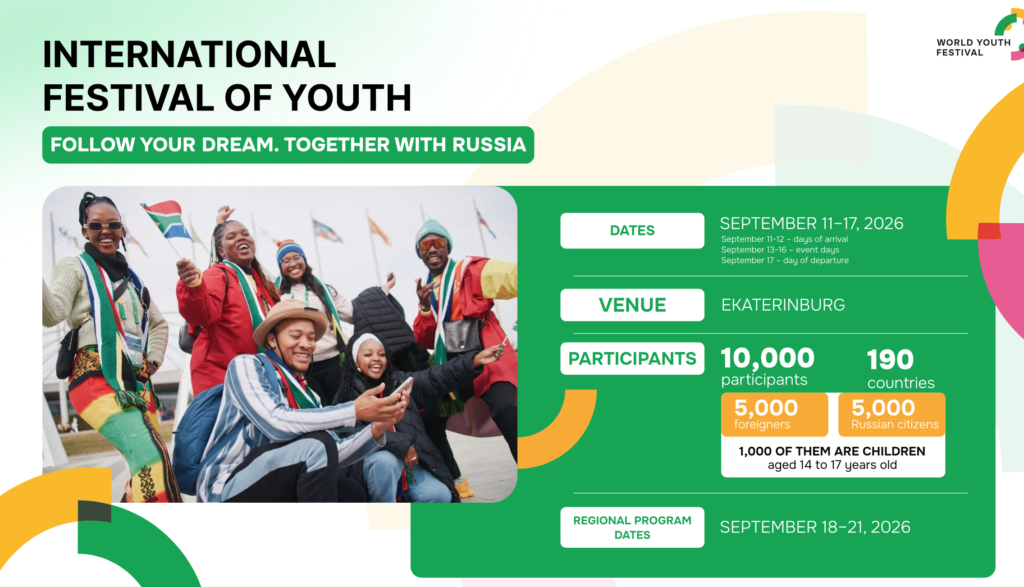
The International Festival of Youth 2026, officially known as IFY-2026, is shaping up to be the most significant international youth gathering of the year. With up to 10,000 participants expected from across the globe, the festival brings together young leaders, researchers, entrepreneurs, media professionals, and activists from every corner of the world for structured dialogue, professional exchange, and meaningful collaboration. If you are between 18 and 35 years old and working in any field connected to public life, the arts, technology, media, or civic engagement, IFY-2026 is an opportunity you need to know about, and applications are still open.
What is the International Festival of Youth 2026?
The International Festival of Youth 2026 is an international youth event being held in Russia later this year, organised under a Presidential Decree of the Russian Federation and managed by the World Youth Festival Directorate, an organisation with decades of experience running large-scale international youth gatherings. IFY-2026 directly follows the World Youth Festival 2024, held in Sochi, Russia, which welcomed participants from over 180 countries and set a new benchmark for global youth diplomacy and exchange.
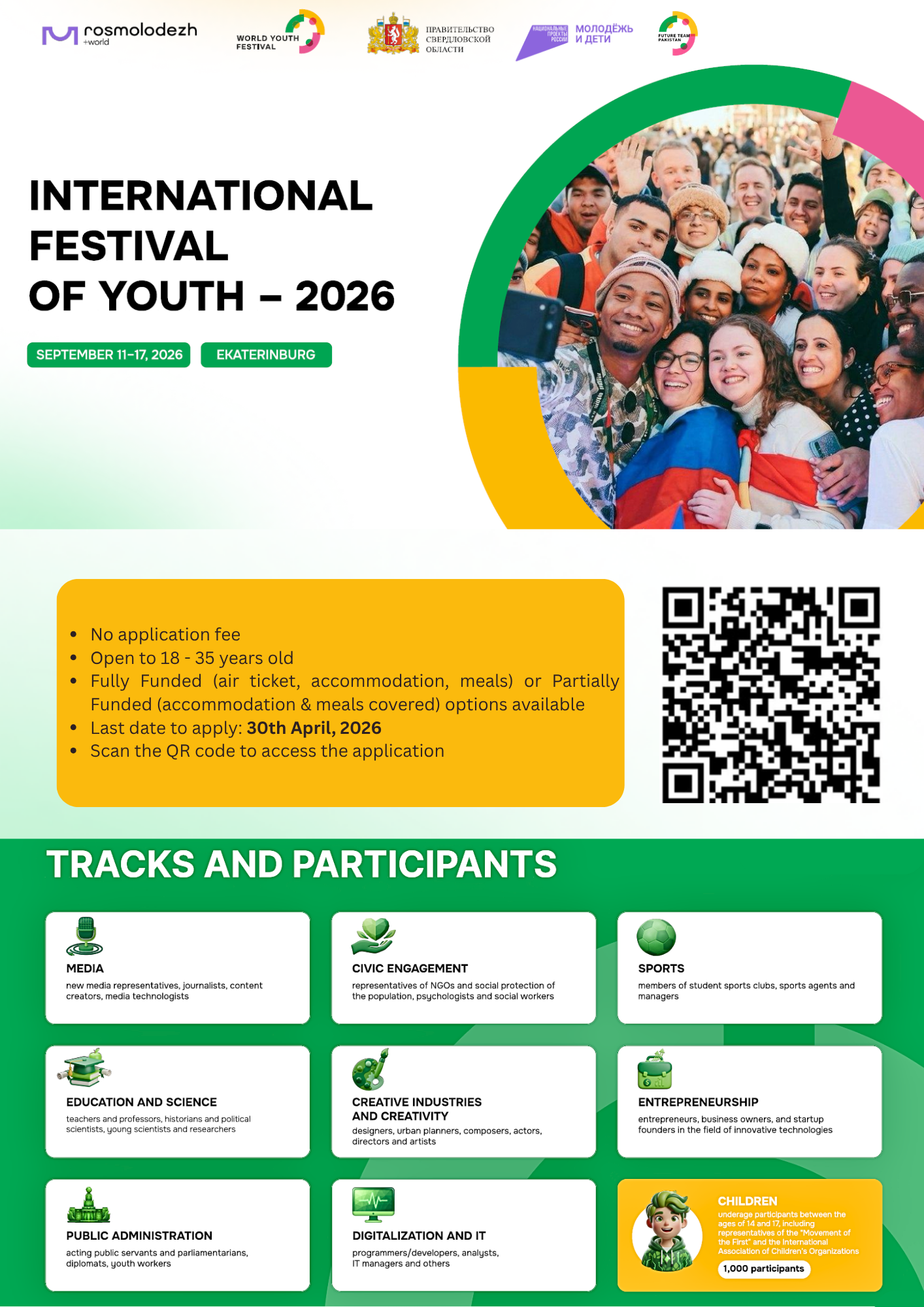
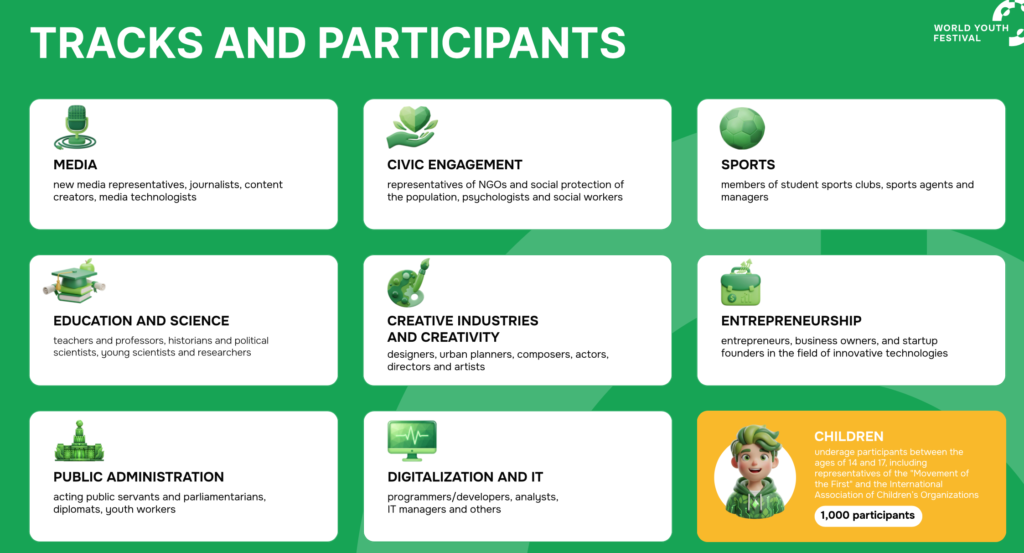
IFY-2026 is not a single conference or a networking event. It is a multi-day, professionally structured festival built around eight distinct tracks that reflect the breadth of today’s young generation: Public Administration, Media, Science and Education, Entrepreneurship, Digitalization and IT, Creative Industries and Culture, Civil Engagement, and Sports and Health. Every element of the festival programme, including panel discussions, workshops, bilateral meetings, project pitches, and cultural events, is organised around these tracks, ensuring that participants engage deeply with others who share their professional interests and ambitions.
In addition to the main festival, IFY-2026 also features the Regional Expedition Programme, an immersive experience that takes selected foreign participants on research routes across different regions of Russia, offering firsthand exposure to the country’s history, culture, technology, and natural landscapes.
Who Can Apply for IFY-2026?
IFY-2026 is open to young people from around the world. The festival accommodates up to 5,000 foreign participants and compatriots residing outside Russia, alongside up to 5,000 Russian and Russia-based participants, for a total of up to 10,000 attendees.
To be eligible as an international applicant, you must be between 18 and 35 years of age as of September 2026. You must have at least a B1 intermediate level of English proficiency, as English is one of the two official languages of the competitive selection process alongside Russian. You must register on the official platform at wyffest.com and complete all required stages of the selection process.
Prior international experience is not a requirement. What matters is that you have genuine professional, academic, civic, or creative experience relevant to your chosen track, and that you can communicate it clearly and authentically.
What Are the IFY-2026 Tracks?
Choosing the right track is one of the most important decisions in the application process, as all content, scoring, and programming is aligned to your selected track. The eight tracks are as follows.
Public Administration is for those working in government, policy, diplomacy, youth governance, or public sector leadership. Media is for journalists, content creators, media entrepreneurs, researchers in communication and information, and digital media professionals. Science and Education is for researchers, academics, educators, and innovators in any scientific field. Entrepreneurship is for founders, startup builders, social entrepreneurs, and business leaders. Digitalization and IT is for software developers, tech professionals, AI researchers, and digital transformation specialists. Creative Industries and Culture is for artists, designers, filmmakers, musicians, and cultural practitioners. Civil Engagement is for activists, NGO leaders, volunteers, and community organisers. Sports and Health is for athletes, coaches, health professionals, and sports administrators.
Applicants are strongly advised to select the track where they have the most demonstrated experience, as the selection committee evaluates all submissions in the context of the chosen track.
How Does the IFY-2026 Selection Process Work?
The competitive selection for IFY-2026 consists of two mandatory stages, both completed online through the official platform at wyffest.com.
Stage One is the Essay. Applicants must write between 1,000 and 1,500 characters with spaces, roughly 150 to 200 words, on a single topic: five facts about yourself that reveal your character, values, and professional experience. The organisers are explicit that they are not looking for dry biographical data. They want to understand who you are, what drives you, and why your experience is relevant to your chosen track.
The essay is not awarded numerical points but is mandatory and is taken into account when forming the final ranking lists. One critical rule: essays written using artificial intelligence tools are disqualified. Authenticity is not just encouraged, it is enforced.
Stage Two is the Self-Introduction Video. This is the heart of the IFY-2026 application and is scored out of 60 points across content and technical criteria. The video must be between three and five minutes long and submitted in MP4, MOV, or AVI format. It must include subtitles in English or Russian, and for videos recorded in English, Russian subtitles are required.
In the video, applicants must answer four questions. First, an introduction to yourself, your education, your field of work, and your interests and hobbies. Second, a description of your key professional and personal achievements over the past three years, relevant to your chosen track. Third, an explanation of why you want to participate in IFY-2026, what you hope to gain, and what skills and knowledge you can share with other participants. Fourth, a presentation of a project you have implemented or wish to implement within your chosen track.
To score in the highest bracket, applicants should include diverse visual inserts throughout the video, such as footage of public speeches, certificates, diplomas, project working moments, and endorsements from mentors or partners. Videos with only one type of insert, or inserts that do not correspond to the chosen track, score significantly lower. Technical quality also matters: clear sound, good lighting, and high resolution are all evaluated.
IFY-2026 Application Deadlines
The main registration stage for IFY-2026 ran from February 5 to April 30, 2026. A reserve registration stage is currently open from May 1 to May 31, 2026. International applicants who apply during the reserve stage are still considered for participation, with their applications reviewed after the main selection is completed, subject to available spots.
The official IFY-2026 application platform is wyffest.com. For support, the organisers can be reached at help@wyffest.com or by international phone at +7 (495) 157-29-29.
What Happens After You Are Selected?
Applicants who are selected receive an invitation via the email address they registered with. They must confirm their participation within 48 hours of receiving the invitation, or the invitation may be cancelled. Top-scoring foreign applicants may be eligible for travel support from the organisers, covering travel from their country of residence to the festival venue and back. Participants who do not score in the top tier are expected to arrange their own travel, though accommodation, meals, and transfers at the festival itself are provided to all confirmed participants regardless of score.
Pakistan at IFY-2026: 250 Slots, a National Committee, and a Growing Presence
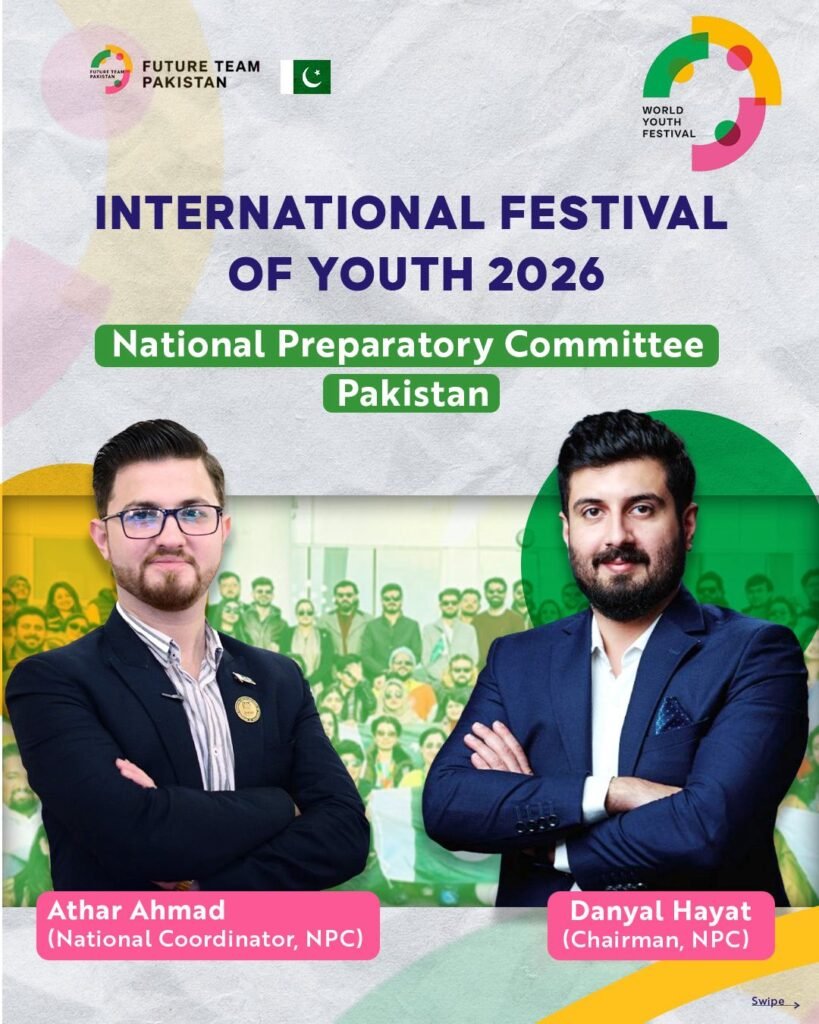
Pakistan has a dedicated and growing presence at IFY-2026. The country has been allocated 250 participation slots, making this one of the most concrete opportunities for Pakistani youth to attend a major international festival this year.
To coordinate Pakistan’s participation, a National Preparatory Committee for IFY-2026 has been formally established, bringing together youth leaders, civil society representatives, and professionals from across the country to support Pakistani applicants through the selection process and ensure a strong national delegation at the festival.
Supporting this effort is Future Team Pakistan, a youth network with direct experience at this level. Future Team Pakistan was actively involved in Pakistan’s participation at the World Youth Festival 2024 in Sochi and continues to serve as a bridge connecting Pakistani young people to international youth opportunities including IFY-2026. Together, the National Preparatory Committee and Future Team Pakistan represent an organised, experienced support structure that Pakistani applicants can draw on as they prepare their applications.
With 250 slots available and active institutional support behind Pakistan’s delegation, this is one of the most accessible and well-supported international youth opportunities Pakistani young people have had in recent years. The question is simply how many will seize it.
Why IFY-2026 Matters
Events like IFY-2026 matter because they create something that cannot be replicated online: the conditions for genuine human connection across national, cultural, and professional boundaries. The relationships built at international youth festivals, between a policy researcher from one country and a media entrepreneur from another, between a tech founder and a civil society leader from opposite sides of the world, are the kind that shape careers, launch collaborations, and occasionally change the direction of institutions.
At a moment when global cooperation faces significant pressures, forums that bring young people together around shared professional interests and mutual respect are not just symbolic. They are a practical investment in the next generation of leaders who will have to navigate those pressures and ideally help resolve them.
For young people who are serious about their field, serious about the world, and serious about building something that lasts, IFY-2026 is worth every effort the application requires.
How to Apply for IFY-2026
Go to wyffest.com. Create a personal account. Select your professional track. Complete the essay. Record and submit your self-introduction video. Do all of this before May 31, 2026.
The world’s young leaders will be in one place later this year. Make sure you are one of them.
About Author


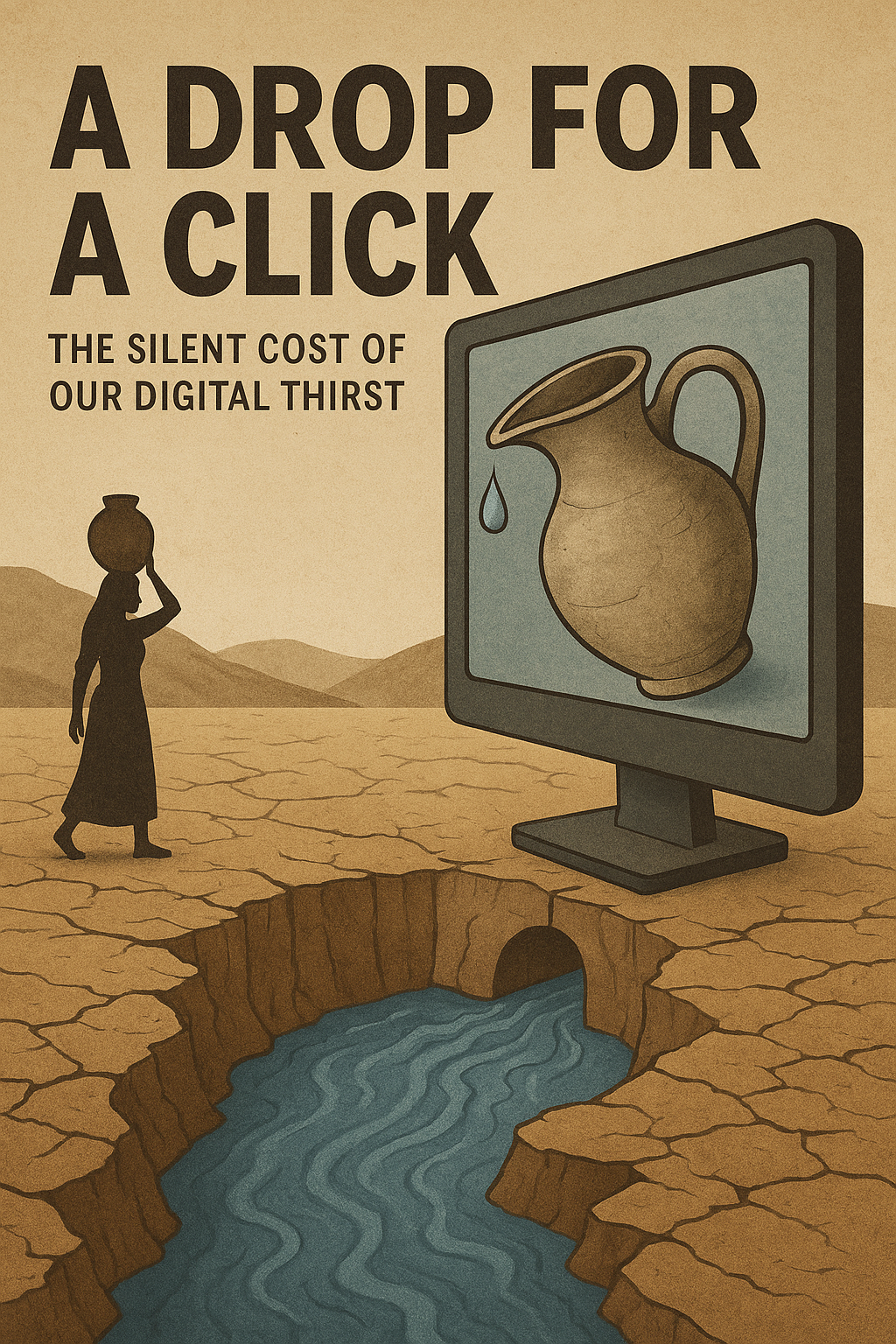
“The greatest threat to our planet is the belief that someone else ill save it.”
— Robert Swan
We are draining rivers to power algorithms. Water remains a fundamental human right, yet 2.2 billion people across the globe still lack access to safe drinking water. In Pakistan, the crisis escalates daily: over
50 million individuals—twice the population of Australia—live without access to clean water. Alarmingly, 90% of the population depends on compromised sources, according to the Pakistan Council of Research in Water Resources. The Indus River, once the lifeblood of civilization, now teeters on the brink of collapse. Glaciers in the north are retreating at nearly three times the historical rate (ICIMOD 2023), while the fertile plains in the south buckle under the relentless grip of scorching heatwaves. This is no longer just climate change; it’s a hydrological emergency—one that remains obscured by the relentless hum of modernity.
In Gilgit-Baltistan, often dubbed Pakistan’s “water tower,” escalating temperatures have precipitated 32 Glacial Lake Outburst Floods (GLOFs) since 2021. These cataclysmic events have obliterated hamlets, dismantled over 40 bridges, and rendered 120,000 people homeless in 2023 alone. The glacial decay is not a localized concern; it imperils the entire Indus Basin, which sustains nearly 300 million lives across South Asia. While mountain communities fight the fury of floods, an insidious form of water depletion continues—hidden in our digital behaviors.
The world is slowly awakening to a crisis that has been gestating in silence for decades. It doesn’t scream from headlines daily, but its toll is unrelenting. Industrial expansion, unchecked urbanization, rising global temperatures, and consumer excess are slowly siphoning away Earth’s most precious resource. From the skeletal beds of rivers and evaporating lakes to the sight of young children traversing kilometers to collect a single pail of water—the evidence is irrefutable. We reside on a planet cloaked in blue, yet for billions, that blue remains a cruel illusion. Water is vanishing from the places that need it the most.
In an era hailed for innovation, technology is often worshipped as the panacea for all global woes. Artificial Intelligence, automation, and cloud infrastructure are transforming human capabilities at a breathtaking pace. However, buried beneath these advancements lies a sobering reality: technological progress is not inherently clean. The algorithms that drive AI systems—whether powering chatbots, virtual assistants, or massive language models—demand colossal computational power. These computations occur inside sprawling data centers, which devour vast quantities of electricity and, more surprisingly, water.
Here’s how: every AI interaction triggers intensive mathematical processes within data centers packed with heat-generating hardware. To prevent overheating, many of these centers rely on sophisticated water-cooling systems. Studies reveal that responding to just one AI-generated query can indirectly consume between 100 and 500 milliliters of water—just to cool the servers that process it. While that seems minuscule, multiply it by the over 10 billion daily queries and the result is staggering: 2.5 billion liters of water per day—the equivalent of 1,000 Olympic-sized swimming pools.
This presents a chilling paradox. AI is simultaneously being deployed to combat water scarcity—via drought forecasting, irrigation optimization, and leak detection—while it contributes to the same crisis through its concealed water footprint. The disconnect lies in perception. Digital activity feels intangible,
but its consequences are physically felt. Each search, click, or command carries hidden ecological costs—in electricity, carbon emissions, and now, water.
In water-scarce regions—rural Sindh, parts of Balochistan, or sub-Saharan Africa—where families ration every drop, nearby data centers are guzzling the same finite resource to maintain operational coolness. This is not an indictment of AI, but rather a call for reckoning—a need to interrogate how we develop and deploy such technologies. Even our most benevolent innovations must be held accountable when their operations place stress on already fragile ecosystems.
Consider this: in 2023, Google consumed 27 billion liters of water for cooling, while Microsoft used over 11 billion. These figures are not just statistics; they represent invisible withdrawals from an aquifer that’s nearing exhaustion. What’s more troubling is that some of these facilities are located in water-stressed regions like Arizona, Spain, and rural Pakistan—placing local communities in direct competition with machines.
While women in Punjab trek for kilometers to fill a pot of water, servers just a few miles away drain the same resource to provide real-time sports scores or play music. The juxtaposition is disturbing. The responsibility must be shared. Tech giants must urgently innovate greener infrastructure—utilizing recycled or greywater, adopting air-based cooling systems, or building centers in naturally cooler climates. Microsoft’s zero-water-consumption facility in Arizona is a prime example that sustainable solutions are possible with intent and investment.
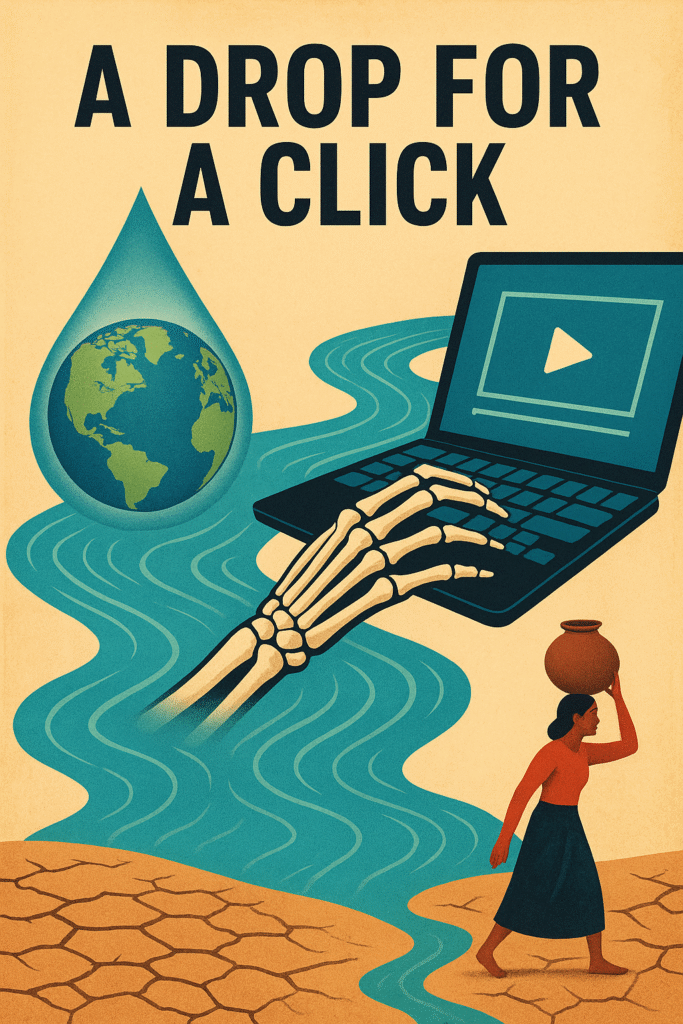
Governments, too, must play a decisive role. Pakistan’s National Water Policy 2023 must extend its reach beyond agriculture and domestic consumption to include digital water use. It’s time for environmental legislation to evolve with technology. Furthermore, individual users must recognize their digital water footprint. If a single person curtails just five unnecessary searches per day, they could conserve nearly 2,000 liters of water annually—enough to sustain another life for a full year.
What we need now is a new paradigm of consciousness—one that links the screen to the stream, the algorithm to the aquifer. While AI can replicate human thought, it lacks human empathy. And in the water wars ahead, empathy—not efficiency—will be our greatest asset.
Water is neither infinite nor optional. It is fragile, communal, and sacred. As we surge into a more digital future, we must ensure that our ambition doesn’t come at the expense of the Earth’s veins. The water crisis is not only about the scarcity of what we sip—it’s about what we search, click, and code. The next time we marvel at a smart response, we must also ask: At what cost?
About Author



Hunza Valley, located in the Gilgit-Baltistan region of Pakistan, is a paradise for travelers seeking breathtaking landscapes, rich culture, and warm hospitality. Surrounded by snow-capped peaks, turquoise lakes, and centuries-old forts, Hunza has become one of the most sought-after destinations in the world. Whether you’re an adventurer, photographer, or peace-seeker, the valley offers something magical for everyone.
1. Karimabad – Heart of Hunza
Karimabad is the cultural and historical hub of Hunza. Lined with cobblestone streets and traditional stone houses, this town offers panoramic views of Rakaposhi, Ultar Sar, and Ladyfinger Peak.
- History & Culture: Once the seat of Hunza’s royal family, Karimabad houses the iconic Baltit and Altit forts.
- Best Time to Visit: April to October, when the weather is pleasant and fruit orchards are in full bloom.
2. Baltit Fort – A Glimpse into Hunza’s Past
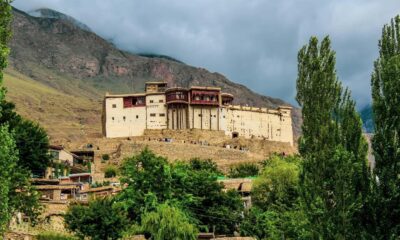
Perched on a hill above Karimabad, Baltit Fort is over 700 years old. Its Tibetan-inspired architecture tells the story of Hunza’s trade and cultural connections.
- Architectural Beauty: Restored in the 1990s by the Aga Khan Trust, it now serves as a museum.
- Tours: Guided tours offer deep insight into Hunza’s royal history.
3. Altit Fort – The 900-Year-Old Marvel
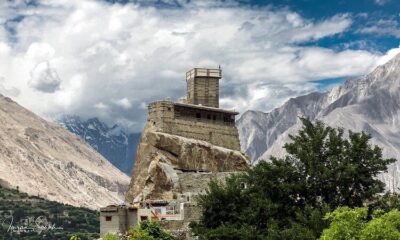
Older than Baltit Fort, Altit Fort stands as a testament to Hunza’s resilience.
- Preservation: The fort has been carefully restored, preserving its original charm.
- Altit Gardens: A beautiful spot for photography and enjoying traditional Hunza tea.
4. Attabad Lake – The Turquoise Gem
Formed in 2010 after a landslide, Attabad Lake has become a major tourist attraction.
- Activities: Boating, jet skiing, and fishing are popular.
- Scenery: The turquoise water contrasts beautifully with surrounding rugged mountains.
5. Passu Cones – Nature’s Sharp Art
The Passu Cathedral Peaks, also called Passu Cones, are a striking natural wonder.
- Trekking: Trails around Passu lead to glaciers and suspension bridges.
- Photography: Best captured during golden hour for dramatic lighting.
6. Hussaini Suspension Bridge – World’s Most Dangerous Bridge
Often labeled the most dangerous bridge in the world, Hussaini Bridge is a thrill-seeker’s dream.
- Adventure: Crossing requires balancing on wooden planks tied with cables.
- Safety: Wear sturdy shoes and avoid crossing in high winds.
7. Khunjerab Pass – Gateway to China
Located at 4,693 meters, Khunjerab Pass is the highest paved international border crossing in the world.
- Scenic Drive: Travel along the Karakoram Highway for breathtaking views.
- Wildlife: Spot Marco Polo sheep in Khunjerab National Park.
8. Hoper Valley – The Land of Glaciers
Hoper Valley is famous for its stunning glaciers and hospitable locals.
- Hoper Glacier: Offers jaw-dropping views of icy landscapes.
- Culture: Locals often invite travelers for traditional Hunza meals.
9. Eagle’s Nest – Best Sunrise and Sunset Point
From Eagle’s Nest, enjoy a panoramic view of Hunza Valley surrounded by towering peaks.
- Views: Perfect for both sunrise and sunset.
- Accommodation: Several hotels and restaurants make it a great overnight stop.
10. Borith Lake – A Tranquil Escape
Located near Gulmit, Borith Lake is a peaceful spot for relaxation.
- Birdwatching: Home to migratory birds such as ducks and geese.
- Trekking: Trails connect Borith Lake to Passu Glacier.

Travel Tips for Visiting Hunza
Connectivity: Limited mobile service in remote areas.
Best Season: April to October for pleasant weather.
Packing List: Warm clothes, trekking shoes, and a good camera are essentials.
About Author


International Festival of Youth 2026 (IFY-2026): How to Apply, Tracks and Deadlines

Muhammad Azeem Khan: Pakistan’s Number One Amateur Featherweight MMA Fighter

A Drop for a Click: The Silent Cost of Our Digital Thirst


-
 Tourism2 years ago
Panel Discussion on Community-Centric Tourism in Hunza on World Tourism Day
-

 Current Affairs2 years ago
Gilgit-Baltistan and the Geopolitics of the Third Pole
-
 Climate2 years ago
Glacier Marriage: Gilgit–Baltistan’s story of tying untraditional knots to mitigate the effects of Climate Change
-
 Climate2 years ago
Eco-Friendly Alternatives: Gilgit-Baltistan’s Green Business Development Initiative
-
 Arts, Culture & Heritage2 years ago
Exploring Baltit Fort: A Jewel of Hunza Valley
-

 Arts, Culture & Heritage2 years ago
Rumi, the Moral Psychologist
-
 Opinion2 years ago
A Tryst With History On The Karakoram
-
 Arts, Culture & Heritage2 years ago
Altit Fort Hunza: A Must-Visit Destination in Pakistan